
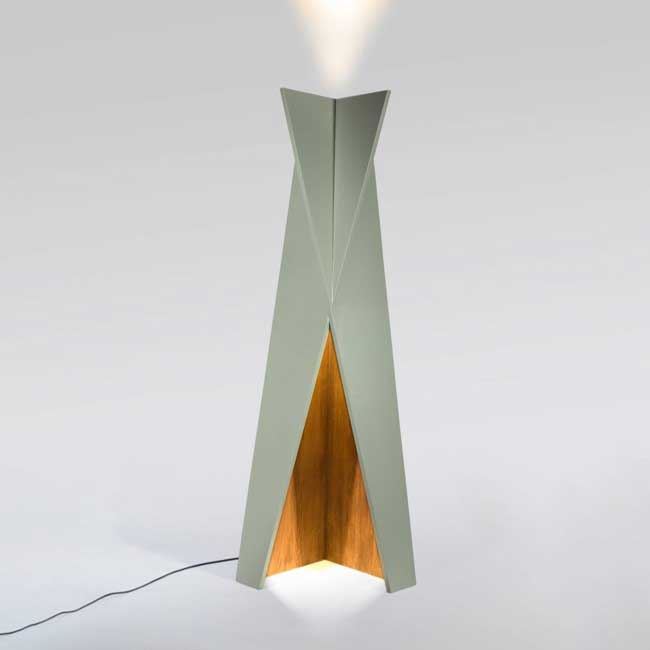
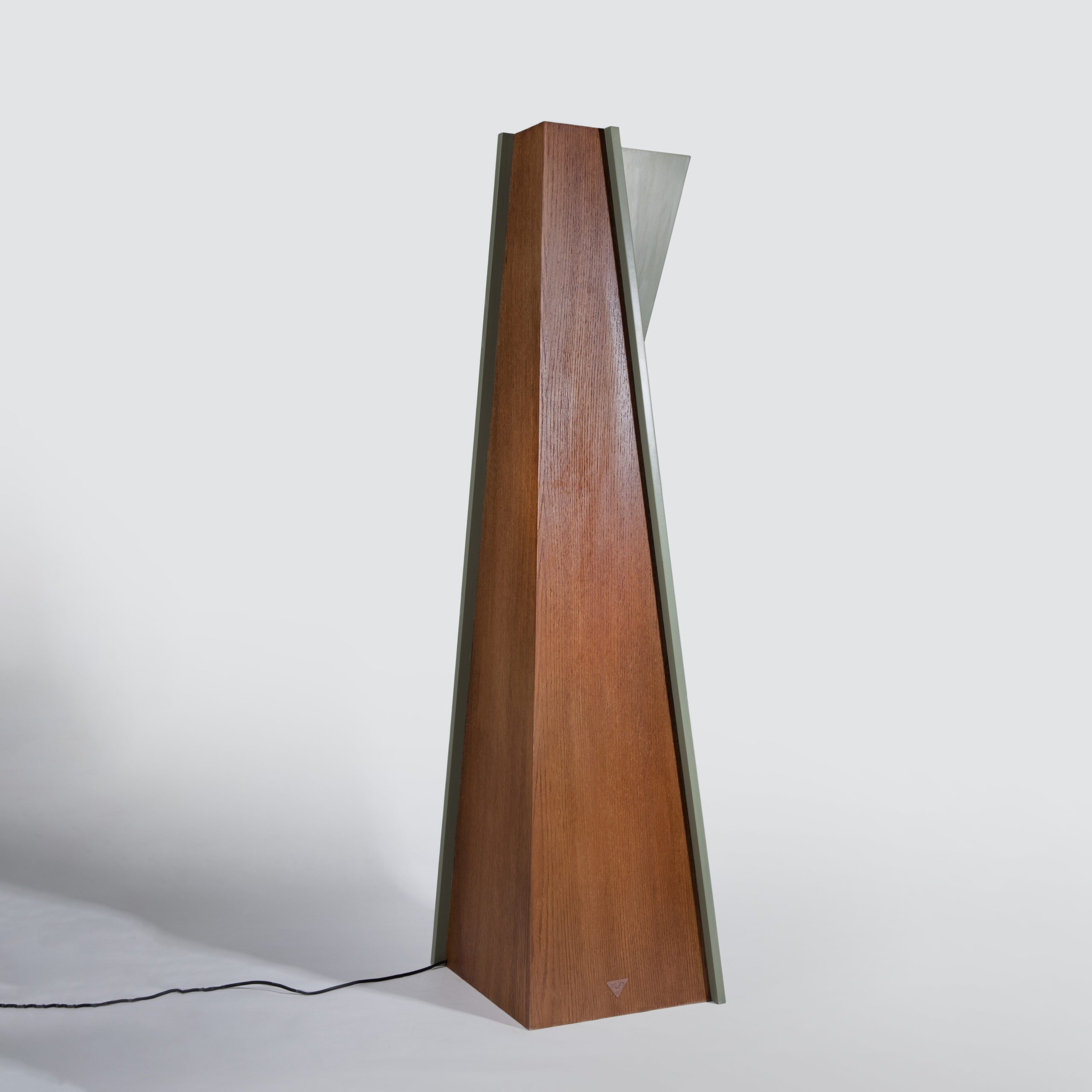




With its pure visual language and restrained form, this work emphasizes the intersection of light and material. Characterized by sharp angles and a gradual opening, the form reveals an inner light that constitutes an integral part of the work itself.
At both the upper and lower ends, light radiates symmetrically outward through the opening. The contrast between enclosed surfaces and open space, between static form and fluid light, narrates a story of hidden presence.
The work is an invitation to contemplation: to observe the fissures, the voids, and the light that emerges from within them, creating an atmosphere of mystery. The steadfast, solid exterior is infused with a luminous core, giving the work a distinctly feminine spirit.
The angular intersections of the volume recall the geometric logic of muqarnas in Iranian domes, where small units arranged according to mathematical order refract light and allow it to pass from the material world.
The work offers a direct, modern reinterpretation of one of the deepest concepts in Iranian architecture and mysticism: the movement from darkness toward light, from earth toward the sky.
At the top, light rises toward the ceiling, evoking illumination; at the bottom, it appears as a reflection of awareness, warming and illuminating the surrounding space.
This duality—between descending light and manifested light, between absence and appearance—is at the heart of the mystical Iranian understanding of architecture and space.
Here, light is not merely for seeing; it is for remembering: remembering a path that begins on earth.